Book Clubs

Hosting Your First Book Club Meeting: A Complete Beginner's Checklist
So you have volunteered to host. Now comes the slightly daunting part: making it actually happen. First meetings are rarely polished, and they do not need to be. What they need is a book everyone has a copy of, a room with enough chairs, and a host who has thought about the shape of the evening. This checklist walks you through it in order, from the first invitation to the last "what are we reading next?"
Start With Three Decisions
Before you invite anyone, settle the book, the date and the place. Everything else follows from those.
On the book: for a first meeting, choose something widely available in paperback and in libraries. A novel of around 250 to 350 pages is a kind reading length. Avoid a brand-new hardback that half the group will struggle to find, and avoid anything so heavy that people feel they are sitting an exam. If you cannot decide, offer three options and let the group vote.
On numbers: six to eight people is the sweet spot for a first meeting. Any fewer and one quiet person feels exposed; any more and the conversation splinters. If your living room seats four comfortably, say so in the invitation rather than hoping.
Invitations: What to Send, and When
Send the invitation three to four weeks ahead. That is enough notice for people to borrow or buy the book and enough time to rearrange an evening. A group message or email thread works fine.
Whichever format you use, make sure it answers every question a guest might have without them needing to ask:
- The book: title, author, and an edition note if translations differ wildly.
- The date and time: including when you would like people to arrive, and roughly when the evening will end.
- The place: full address, which door, buzzer code if relevant, and parking or transport notes.
- What to bring: a copy of the book, something to drink or share, or nothing at all.
- The tone: say plainly that finishing the book is not compulsory. It removes a barrier for anyone who has had a busy month.
Follow up a week before with a short nudge. A single line — "Still on for Thursday, hope you can make it" — recovers more guests than any elaborate planning does.
The Week Before: Five Small Jobs
None of these takes long, and together they remove most of the stress from the evening itself.
- Tidy, don't deep-clean. Clear surfaces, put out coasters, and make sure the downstairs loo has soap and a towel.
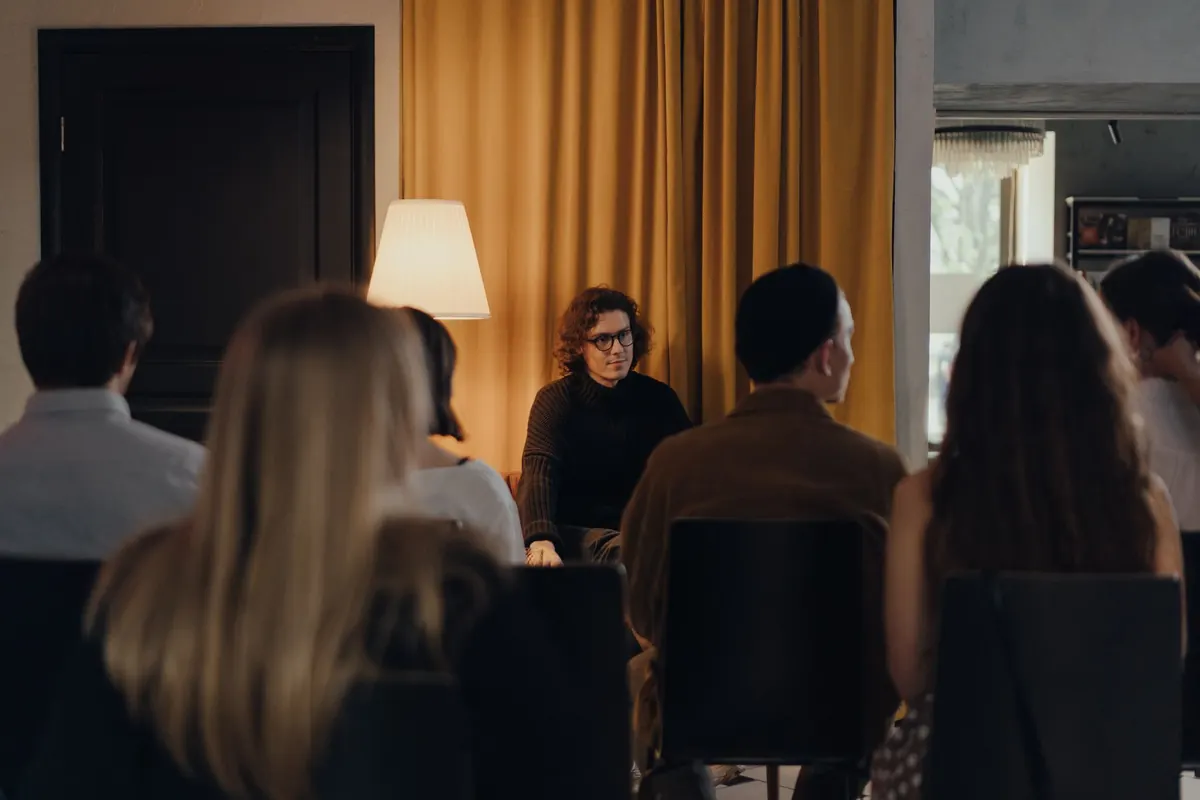
- Arrange the seating in a circle. A row of chairs facing a sofa turns the evening into a lecture. Move things now, not while people are arriving.
- Write six to eight questions and keep them somewhere discreet — the back of an envelope is fine.
- Reread the last thirty pages. Endings are the most discussed part of any book, and you will want the details fresh.
- Prepare a two-minute summary for anyone who did not finish. It lets them join in without feeling they have to confess.
Refreshments Without the Fuss
Keep it simple and keep it separate from the discussion. Drinks, something salty, something sweet, and a jug of water. If you want to share the load, ask each guest to bring one thing in the invitation — people generally prefer contributing to being fed.
Anything that needs last-minute work in the kitchen will pull you out of the room at exactly the wrong moment, so skip hot dishes. Check for allergies or dietary needs when you send the invitation rather than on the night. And if you are serving wine, put the bottles away once the discussion starts; the conversation tends to drift otherwise.
A Timing Plan for the Evening
You do not need to run the meeting like a committee, but a loose structure stops the first hour disappearing into small talk. Something like this works well for a weeknight:
- Arrival (first 20 minutes): drinks, greetings, a plate passed round. Let people settle.
- Opening round (5 minutes): name, and one sentence on how far they got with the book.
- First discussion block (45 minutes): start broad, then narrow. See the prompts below.
- Break (15 minutes): refills, biscuits, general chat. This is where quieter guests often say the most interesting things.
- Second block (30 minutes): the ending, the themes, what the book got right and wrong.
- Admin (10 minutes): choose the next book and date, and decide who hosts.
- Winding up: give a clear signal, thank people, and let the stragglers drift home.
Discussion Prompts That Actually Work
"Did you like it?" is a dead end. It invites a yes or a no, and the evening stalls. Open with something that requires a sentence instead:
What did you expect this book to be, and how far was the reality from that?
Other reliable openers: which character would you most want to sit next to on a long train journey, and why; was there a passage you marked or reread; did the author play fair with the ending; whose story did you want more of?
Useful tactics as the conversation moves. Go round the room once so everyone speaks early — after that, people find it easier to jump in. Let silences sit for a few seconds; someone will fill them. If two people dominate, ask directly for a view from the quiet side of the room, without making a production of it. And if the group hates the book, that is not a failure. A lively disagreement is more fun than polite agreement, and you can steer it towards what the author was attempting rather than simply listing complaints.
Ten Minutes Afterwards That Save the Next Meeting
Once the door closes, sit down with a notebook before you start washing up. Write the next date, the next book, and who has volunteered to host. Note anyone who could not come and might want a say in the choice. Then send a short message to the group: thanks for coming, here is what we settled on, see you next time.
That is genuinely all a first meeting needs. It will not run to schedule, someone will arrive late, and the discussion will wander somewhere entirely unexpected. Those are the evenings people remember. Your job is simply to have the chairs ready and the first question in mind.
Photo: lil_foot_ / Pixabay
Related Articles